Flickering or Dimming Lights: Causes & What To Do
Occasional flickering can be as simple as a loose bulb. But lights that dim across the whole house, or flicker in a pattern, usually point to a wiring or connection issue worth having checked.
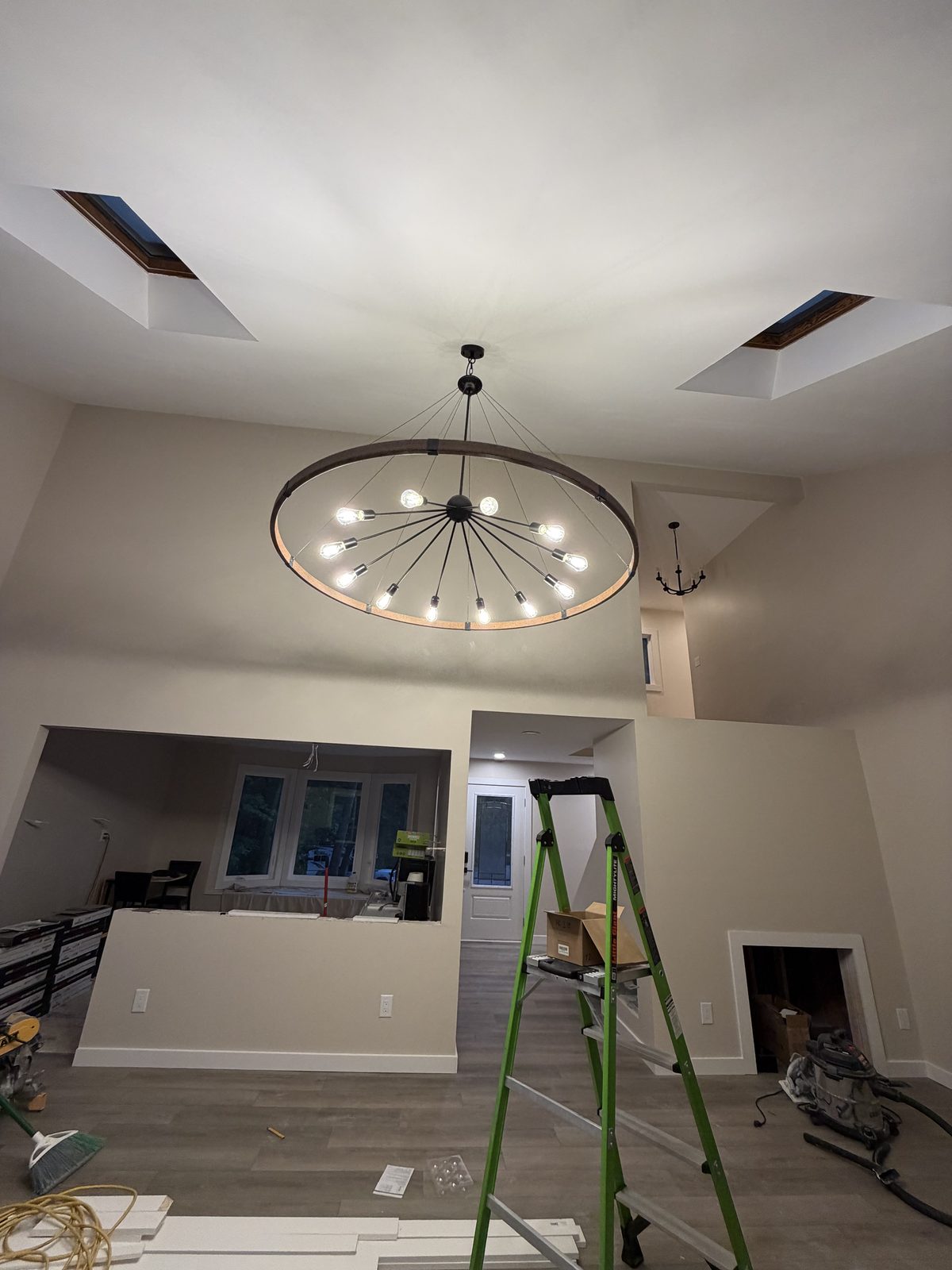
Why this usually happens
- A loose or worn bulb connection in the fixture
- A loose wire connection at the switch, fixture, or panel
- A large appliance (AC, well pump) starting up and pulling a brief voltage dip
- An overloaded circuit shared with the lighting
What you can safely check yourself
- Tighten or replace the bulb first — it's the simplest cause
- Note whether the flickering happens in one room or the whole house
- Check if the flickering lines up with an appliance turning on
When to stop and call a licensed electrician
Whole-house flickering, or flickering paired with a burning smell or a warm switch plate, can point to a loose connection at the panel — a shock and fire risk that needs a licensed electrician, not a bulb swap.
What not to do
- Don't ignore whole-house flickering as “just old wiring”
- Don't open switch or outlet covers to check connections yourself
Flickering or Dimming Lights — common questions
Why do my lights flicker when the AC turns on?
This is often a normal, brief voltage dip from a large appliance starting up. If it's severe or happens with every appliance start, it can point to a loose connection worth checking.
Can flickering lights be a fire risk?
Yes, in some cases — a loose wire connection can generate heat at the connection point. If flickering is paired with warmth, buzzing, or a burning smell, treat it as urgent.
Related service: Lighting & Fixture Work →